

Speculative Fiction: Character Bleed
Your friend brings you to an XR-Live-Action-Roleplay.

Written by James Vinson.
Your friend wants to bring you to an XR-LARP.
Your mind immediately jumps to an image of people dressed up in chainmail swinging foam swords in a park. Your friend assures you this will be so much more than that. You tentatively believe her. You find it hard to imagine how such a wordy acronym can form a single cohesive experience (Extended Reality Live-Action Role Play, goodness) but you’ll try anything once. You like dressing up and you like videogames, so you figure - why not? The event is called Omega Void, a 48-hour Afrofuturist immersive narrative. The aesthetically minimalist landing page says: Black Panther meets Interstellar. It has been designed by a well-regarded immersive theatre collective of inclusive, global majority game makers.
“Players will roleplay as Omega Void's multi-generational crew, a diverse mix of ethnicities, all of whom are descendants of a Pan-African exodus that left a dying Earth.”
Your friend says this framework will allow players of all backgrounds to connect with a shared history and struggle, creating space for multi-faceted leadership styles and cultural influences within the crew without being appropriative.
There is a disclaimer before booking our tickets; Omega Void aims to weave challenges into the narrative that will echo the historical struggles of the Black diaspora, such as maintaining cultural identity in exile and overcoming systemic oppression by the previous inhabitants of Earth.
You are nervous. You are not sure how you could possibly manage to navigate such a complex narrative in an improvisational setting. You have doubts about your acting ability. Worst of all, you are worried you might say the wrong thing. Perhaps this XR-LARP is not for you.
Purchasing a ticket entitles you and your friend to a free “Session Zero” workshop that will be taking place one week before the main event. Whilst not mandatory, attendance is strongly encouraged. Your friend says this is a great opportunity to be onboarded, to have the event demystified, and to realise it’s not such a big deal – it’s supposed to be fun!
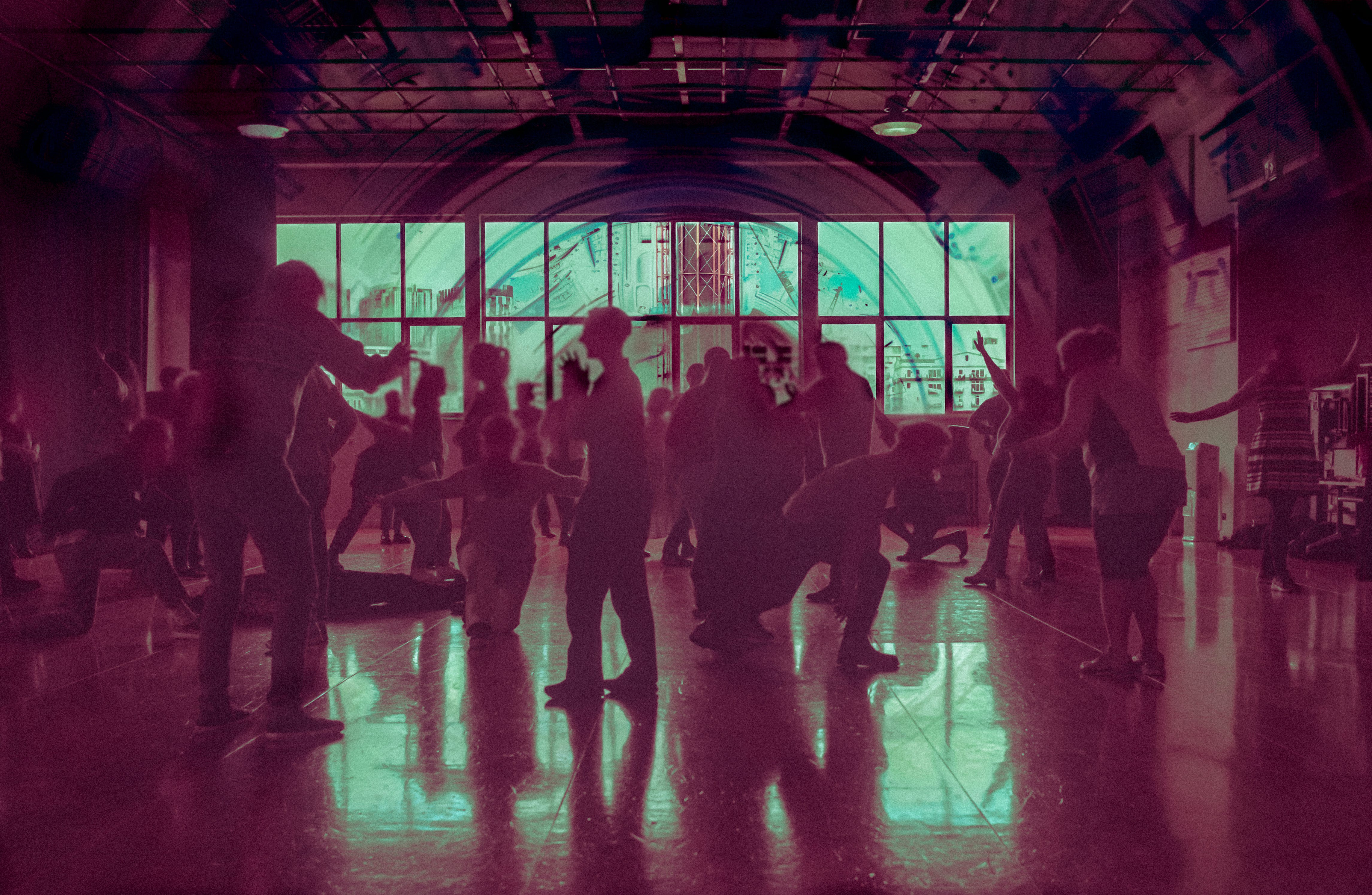
The workshop takes place in a community centre owned by the local church. The hall is a little rundown, but as you look upon the other strangers who have attended, all two hundred of them – you sense that no one seems to mind. Spaces for community outreach are on the decline these days, and everyone just seems happy to be together.
Omega Void’s lead designer, Ytasha Mendes, runs the workshop with an easy-going authority. She warms up the group with a bunch of theatre games. You throw balls, you sing songs, you practice consent exercises like how to say “no” without feeling like you are ruining someone else’s fun, how to say “yes and” so that you honour another player’s creative offer, how to say “no but” if you wish to seek a compromise. You learn a special hand signal to indicate when you would like to speak “out of character’. You now know almost everyone’s name.
Your friend gives you a nudge of encouragement. She can tell you are coming out of your shell. These people are nice to be around. For the most part, they are gentle, respectful, creative. Many are neurodivergent, are introverted, would class themselves as “nerds”. Some, not all. They are a mix. They are all here for different reasons, though they are bound by the same passion, the same wish-fulfilment. For an embodied narrative experience. To express themselves - outside of themselves.
Ytasha transitions to the next phase of the workshop: character creation. She instructs you – if you haven’t already – to boot up your Glimmer. You tap your temple and receive a notification that Omega Void wishes to share with you HD_Texture_Pack.zip. You swish the air and hit accept.
You see an overwhelming menu of hairstyles, facial features, body types, and clothing that reflect a wide range of futuristic cultures.
Ytasha gently reminds everyone that they can choose any configuration they wish, with a few caveats. Experienced players are free to choose any ethnicity, heritage, or cultural background that diverges from their own lived-in experience - influencing their class, skills, and specialisations - but it is crucial to develop these characters respectfully, avoid stereotypes, and get the okay from the organisers before the game commences.
Less experienced players are advised to create a character that is more closely linked to their current identity-leaning “but again,” says Ytasha, “this is only an invitation. We wish to empower you, the player, to explore the limits of your roleplaying identity as much as you like, so long as you meet our community guidelines for what is considered sensitive and generous play. We take these guidelines seriously. Violations can result in warnings, removal from specific scenes, or even expulsion from the LARP depending on the severity.”
You make a non-binary robotics engineer named Skelden Kennedy. You don’t adjust your skin tone, but you give yourself a shock of atomic green hair and a bioluminescent jumpsuit. Your body is not entirely like the body you have in standard reality, but it is the body you aspire to have. You are told to consider three foundational elements for creating your character: a virtue, a fatal flaw, and a secret.
Virtue: Resourceful
Skelden is a master of improvisation. Given enough scrap metal and a flickering power cell, they can jury-rig a solution to almost any technical problem.Fatal Flaw: Overconfidence
Skelden’s confidence in their abilities can sometimes border on arrogance. They often underestimate the complexity of a problem and overlook crucial details that lead to setbacks or malfunctions.Secret: Haunted by Past Failure
Years ago, back on dying Earth, Skelden caused a critical system failure on a carbon-removal greenhouse, leading to a devastating loss of plant life. They carry their guilt to this day, constantly striving to prove themselves to a fault.
You look to your friend, and through your Glimmer, see that her appearance has entirely changed also. Her outfit is all ruffles and cravats, glittering gold.
She tells you she is Amani Khan: “a wealthy diplomat burdened by family legacy. A brilliant negotiator with a silver tongue, she unites factions but doubts the mission's very purpose. Can she navigate the interstellar political landscape and her own cynicism to secure humanity's future?”
You look around, and witness the entire player-base transformed. A kaleidoscope of psychedelic archetypes, a melting pot of animated discussion and colour, huddled against the pale plaster walls of the community centre. An amusing anachronism.
You are reminded of how your parents once said their generation was far more fluid than the last. Your generation is beyond fluid. You are steam.
Ytasha checks in with you. She knows you are an inexperienced player, and she is ready to field any questions. She says she likes your hair, and you can tell she means it. She really gets a kick out of this, witnessing the creativity of the community she has carefully nurtured, letting them surprise her.
She has designed this experience with meticulous precision, of course, but she never has a fixed outcome in mind. She never knows what the players will do. When the event of Omega Void rolls around in earnest, she transparently tells you that she has no idea what kind of story will unfold. She has wound up the clock, but it’s up to the players to tell their story. It is collective, modular myth-making, and she couldn’t be more excited.
And now for the final phase of the workshop: the vertical slice.
Ytasha and her writing team have trained an AI text-to-videogame model to generate 3D environments, NPC dialogue, and gameplay scenarios based on player reactivity. It is a combination of hand-crafted design meets procedural storytelling. This is a tool Ytasha will be using in a private room (“the tank”) to orchestrate various player questlines and ensure meaningful, immersive interactions. You marvel at how any designer can hold so much in their head.
Your Glimmer receives a new notification: Omega Void wishes to share with you Dynamic_Dungeon_Master.dmg. You install it. The community hall transitions, as the pale walls are retextured to the gleaming brass and copper panels of the Omega Void megashuttle.
Your vision is now entirely enveloped. The crew is all aboard, free to explore the ship at their leisure. You are relieved to discover that the XR environment maintains the same fundamental architecture of the room you inhabit in reality – so you will not bump into anything. From the tank, Ytasha messages everyone the primary community guidelines once more.
· Stay In Character: Once the game begins, strive to remain in-character and contribute to the immersive narrative.
· Respect the Setting: The world of Omega Void is rich and complex. Respect the established lore and technology.
· Meta-Gaming is Discouraged: Avoid using out-of-game knowledge to gain an advantage within the LARP.
· Harassment-Free: Omega Void has zero tolerance for harassment, discrimination, or offensive language of any kind.
· Respectful Boundaries: Respect other players' physical and emotional boundaries. All interactions must be consensual.
The vertical slice begins.
You find the Omega Void has crash-landed on an uncharted moon. Critical systems are damaged, and resources are dwindling. A distress beacon has been sent, but Earth has gone silent. Intentionally. Systemically. They refuse to send aid. Typical.
You detect a strange heat signature emanating from the moon's surface. You collaborate with another player (you forget their real name but their character name is Wotherspoon) to decode the anomaly. Together, you reveal the coordinates for a potential source of rare minerals – essential for repairing the Omega Void's engines. However, retrieving these resources requires a risky excursion into the moon's hazardous atmosphere.
You like speaking with Wotherspoon, and feeling a thrumming in your heart that can only be described as intimacy. The alterations you’ve made to your body, to your hair, they are cosmetic, but they are also very important to you. In day-to-day life, there are no guarantees your chosen identity will be taken at face value, recognised, or celebrated. But here, you see that Wotherspoon sees you only for who you choose to be. Skelden Kennedy, the bright engineer. It is total resonance. A reciprocal gaze. You are seen. You realise you haven’t even thought about acting. You are not acting. You’re just here.
You run into your friend, Amani Khan (she isn’t using her real name anymore). She is on a totally different quest line. She’s received a reply to the distress beacon: a faint, encoded message from an unknown civilization, possibly extra-terrestrial. Amani believes it could be a potential first contact, offering rejuvenated hope for the Omega Void's mission. However, translating the message requires a rare decryption key rumoured to be held by a reclusive tribe on the moon's surface; descendants of a hidden Pan-African civilization forced to isolate themselves. There is a sense that the crew of the Omega Void will meet the same fate if they become stranded for too long. Using the decryption key requires knowledge of their lost languages and rituals. Skilful diplomacy with the tribe will be essential.
So you make preparations with Amani and Wotherspoon to embark on a perilous journey to the moon's surface to achieve your respective goals. But there’s a problem: the Omega Void only has enough resources for one safe expedition.
You’ve been playing for almost three hours now, and your thoughts are Skelden’s thoughts. You are confident in your abilities, believe you can complete both missions – retrieving the minerals and the decryption key – in a single, daring expedition. You downplay the dangers, you manipulate Amani into staying behind to "oversee" the ship.
Amani, fuelled by her cynicism about the mission, suspects your motives and questions the legitimacy of the mineral discovery. You are paranoid that she’s secretly planning to use the resources for her own diplomatic voyage to meet with her precious alien civilization, prioritising potential first contact over fixing the ship! How dare she! Turncoat. Traitress. Intolerable. You won’t let her. You’re ready to--
--The vertical slice ends.
There are forty-five minutes left in the workshop to de-character. But you are still Skelden. Your nervous system is pumping blood to every extremity of your body, itching for closure. You feel potent loyalty to Wotherspoon, who is a total stranger, and you feel seething contempt for your friend, the one who brought you here. Your overconfidence was real confidence. Was confidence in yourself, from within. The anger for Earth was your anger. You felt so much, in so short a time.
You shut down your Glimmer as Ytasha sidles up to you. She tells you what you are experiencing is “character bleed”. It is apparently a common experience for many LARPers, akin to split identity, if only very mild. “This was only a vertical slice, and the sensation should dissipate by dinner time. But after a 48-hour XR-LARP, it may take several days to shake the feeling. We have some exercises to help you regulate. Right now, I want you to imagine you’re sitting at the crew canteen next to Skelden. Let yourself observe Skelden, as another entity, separate from you. Talk to them. Let them tell you about what just happened to them. Listen to them, laugh with them, validate them. Then, when you are ready, let them return to their world, whilst you return to yours. You will see each other again in a week!”
This was tremendous. And the Virtue, Fatal Flaw, Secret model is a stunning takeaway for any storyteller building characters from the ground up. Thank you, James! 🥂
Hello,
Help. I am experiencing "weird-world bleed". All before coffee and breakfast. ...where am I, who am I?